
Food street
A food street is a pedestrianized area that has been designated for restaurants and cafes. Such areas are found in several major Pakistani cities. The food street is lined with food stalls, restaurants, and other food shops, and are typically pedestrianized. Food streets, and food parks, exist in several metropolitan cities in the country, and attending them has become a social norm, with people using them as both formal and informal meeting areas.
The first food street in Pakistan was Gawalmandi Food Street located in central part of Lahore.[This has been followed by Melody Food Street and the food street in Blue Area in Islamaba
In Islamabad, prior to the creation of Melody Food Street, restaurants were scattered around the city. Members of middle class society prefer them because they are less expensive than hotels or high-quality restaurants.
Popular food streets in Pakistan
Gawalmandi food street
A taste of history
After partition, Gawalmandi was the first properly developed area outside of the walled city in Lahore. It had already become a residential community after 1911. Later on, it was the Gulberg of its time,” Shakeel explains.
According to Shakeel, the families who migrated to Lahore from Amritsar and other nearby cities settled in Gawalmandi. Among them were craftsmen and even some businessmen. A lack of employment opportunities for the newly-arrived families meant that some of the individuals started setting up small shops in front of their houses. The skillful craftsmen made a living through their trade while some of the individuals put up food stalls along the streets.
 |
| Harees being prepared at a shop in Gawalmandi. — Photo by Muhammad Umar |
“The food stalls gradually mushroomed until each corner of the street was offering something unique. For instance, the Sikhs from Amritsar who settled in Gawalmandi introduced gram flour-coated fried fish. This was the famous ‘Sardar Fish’. The recipe has almost become an identity of Lahore now.”
Similarly, barbeque techniques and various types of falooda were introduced by the families whose ancestors were pehelwans. The Kashmiris brought with them Hareesa. The rich doodh-jalebi concoction also found fame in Gawalmandi and the diverse population each brought something unique, Shakeel says.
“Gradually, there came a time when Gawalmandi became associated with great food even though there were other businesses operating here. But it was the food here that stood it apart from the rest of the city. Nowadays, people have recipes written down in books and that’s how they make their food. But these were people who had taste in their hands, so to speak, from generation to generation.”
It was in 2000, when it was first suggested by some food aficionados and the local government to turn Gawalmandi into a proper food street which would it give an identity globally. So Shakeel, along with the authorities, went about convincing the community about the initiative.
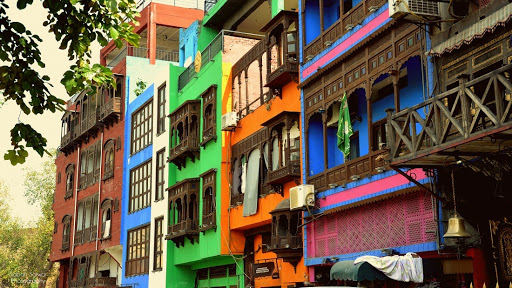
“The people living here were hesitant first because they did not understand the concept. But gradually, all were in agreement and the historical structure around the street was preserved while the residential buildings were bought by the government from their owners. The photo studios and other shops were also turned into restaurants.”
 |
| The historical structures around Gawalmandi food street have been preserved. |
 |
| A view of the food street. |
 |
| A shop that offers Hareesa and barbeque. |
 |
| The food street offers all varieties of naan and parhatas. |
It was after the American consul general visited the place that the Gawalmandi food street really took off, though.
“He was shocked to see such a diversity of food and the men, women and children all out in the street. He obviously had a very different view of Pakistan. After that diplomats from several embassies visited until the food street became a tourist hub.”
Anarkali food street
Internationally known for its rich food, Lahore food streets hosts thousands everyday with their traditional cuisine. The food street, Anarkali is a modernized version of a rich tradition of cafe life of Lahore. Anarkali is one of the oldest surviving markets in South Asia, which dates back to at least 200 years. The bazar derives its name from a nearby mausoleum of a courtesan girl who was punished by Mughal emperor, Akbar for having a love affair with his son, Salim who was later known as Emperor Jahangir. It is the oldest bazars of Lahore with great memories of great personalities, shops and buildings. The food street, Anarkali has served generations of students of nearby university and college. Besides that, it has been a famous sitting place for the poets, writers, politicians and artists of Lahore.
 Site Title